In 2024, a study from Portland State University and Oregon State University tested 182 seafood samples from markets across the US West Coast. The result was striking: 180 out of 182 samples - 99% - contained microplastic particles. Pink shrimp had the highest concentrations. Chinook salmon had the lowest. But virtually nothing was clean.
That finding made international headlines. But as a seafood scientist, I want to move beyond the headlines and into what the data actually tells us - and doesn't tell us - about the risk to your health.
First: What Are Microplastics and Nanoplastics?
The terminology matters, because the size of the particle determines both how it enters your body and what it might do once inside.
- Microplastics: Plastic particles ranging from 1 micrometer (µm) to 5 millimeters (mm) in size. Visible under a standard microscope, sometimes even to the naked eye.
- Nanoplastics: Particles smaller than 1 µm (some definitions use 100 nanometers as the threshold). Invisible to conventional microscopy. Far more difficult to detect, quantify, and study.
The distinction is critical. Microplastics are well-documented in seafood. Nanoplastics are far less studied - not because they are absent, but because we lack reliable methods to detect and measure them in complex food matrices. As the EFSA (European Food Safety Authority) noted in their 2025 review, virtually nothing is known about nanoplastic presence in the marine environment.
The Scale Problem
A human hair is approximately 70 µm wide. A microplastic particle can be as small as 1 µm - 70 times thinner than a hair. A nanoplastic particle can be 1,000 times smaller still. At those scales, particles can potentially cross biological membranes that would block larger objects.
The Global Picture: How Contaminated Is Our Seafood?
Let me lay out the data from recent peer-reviewed studies, because numbers matter more than narratives.
Contamination Rates by Species
- Mussels and bivalves: 2.1 to 10.5 microplastic items per gram in Chinese commercial species; 53-64% contamination rate in Adriatic Sea mussels; 3.4 to 12.6 particles per individual in Marmara Sea mussels
- Fish (gastrointestinal tract): 36.5% of fish in the English Channel; 55.9-92.3% along the Chinese coast; 1.2 to 4.7 particles per individual in Marmara Sea commercial species
- Canned fish: Median of 2.4 microplastics per gram - the highest of all processed seafood products tested in a 2025 German survey
- Shrimp: Among the highest contamination levels globally, as they feed by filtering water where microplastics concentrate
Estimated Human Intake
- European consumers: Up to 11,000 particles per year from shellfish alone (Van Cauwenberghe & Janssen, 2014)
- German consumers: Approximately 16,500 particles per year from all seafood (2025 estimate)
- Children vs adults: 458 vs 2,342 particles per year from moderate mussel consumption
- All protein sources combined: Up to 3.8 million particles per year from commonly consumed proteins (not just seafood)
The Turkish Picture: Data from Our Own Waters
This is where the data becomes particularly relevant for Turkish consumers, and where my regional expertise allows me to provide context that international reviews often miss.
Marmara Sea Study (Hacısalihoğlu, 2025)
A landmark 2025 study published in Aquaculture Research examined microplastics in five commercially important fish species and Mediterranean mussels (Mytilus galloprovincialis) from five regions in the Southern Marmara Sea:
- 1,734 microplastics were recovered from 660 fish samples
- 650 microplastics from 50 mussel samples
- Anchovy (Engraulis encrasicolus) contained 480 microplastics - the highest among fish species
- Mussels contained 3.4 to 12.6 particles per individual
- Fish ranged from 1.2 to 4.7 particles per individual
Turkish Exposure Estimate
Based on Marmara Sea data, estimated annual microplastic intake for Turkish seafood consumers ranges from 1,584 to 10,054 particles per person per year - significantly higher than estimates for Spain, the UK, Belgium, and France. This likely reflects the high per-capita seafood consumption in coastal Turkish cities and the environmental pressure on the Marmara Sea.
Why is the Marmara Sea particularly affected? It is a semi-enclosed body of water surrounded by Istanbul (population 16+ million) and heavy industrial activity. The combination of urban runoff, industrial discharge, and intense maritime traffic creates conditions for microplastic accumulation. A 2025 study of Turkish coastal lagoons found 15,526 microplastics across five Mediterranean lagoons, with water concentrations reaching 47.5 particles per liter in November.
Why Mussels Are Sentinel Organisms
As I discussed in my recent article on midye dolma food safety, mussels are filter feeders that pump 50-80 liters of water per day. This makes them both nutritionally rich and highly efficient at concentrating whatever is in their environment - including microplastics. A mussel from clean waters is safe. A mussel from polluted waters is essentially a biological sampling device for contamination.
Health Implications: What Do We Know?
This is where I want to be carefully honest. The headlines about microplastics are alarming. The actual health science is still emerging.
What Research Has Shown
Laboratory studies - primarily in cell cultures and animal models - have documented several potential mechanisms of harm:
- Inflammatory responses: Microplastics can trigger inflammation in gastrointestinal tissue
- Oxidative stress: Particles can induce cellular oxidative damage
- Chemical carriers: Microplastics can adsorb and transport persistent organic pollutants (POPs), heavy metals, and endocrine-disrupting chemicals
- Organ translocation: Nanoplastics in particular may cross the intestinal barrier and reach the bloodstream, liver, and other organs
A 2025 review in The Lancet Planetary Health associated microplastic and nanoplastic exposure with elevated risk of metabolic, respiratory, cardiovascular, neuroendocrine, hepatic, renal, and skin disorders, as well as cancer and aging-related conditions.
What We Don't Yet Know
There are critical gaps:
- No standardized methods exist for assessing human health risks from microplastic exposure
- Dose-response relationships in humans are not established - we know particles are present, but not the threshold for harm
- Nanoplastics are barely studied because detection methods are still being developed
- EFSA's scientific opinion on microplastics in food is not expected until end of 2027
"The European Parliament has requested EFSA to deliver a scientific opinion on the potential health risks posed by microplastics in food, water, and air. The answer is still years away. In the meantime, we must act on the precautionary principle."
Public Awareness Is Rising
According to EFSA's Special Eurobarometer on Food Safety (2025), 63% of EU citizens are now aware of microplastics in food, and 33% identify microplastics as one of their main food safety worries. This represents a significant shift in consumer consciousness.
A Global Research Response
The International Atomic Energy Agency (IAEA) launched a new four-year coordinated research project in 2025 specifically targeting microplastics in seafood. This project will develop standardized analytical methods and provide the first globally comparable dataset on microplastic contamination levels across seafood supply chains.
This is exactly the kind of systematic, multi-country research needed to move from fragmented studies to actionable risk assessment.
Practical Guidance: What Can Consumers Do?
While we await definitive health risk assessments, the precautionary approach suggests minimizing exposure where practical. Here are evidence-based recommendations:
Seafood-Specific Tips
- Choose filleted fish over whole small fish. Microplastics concentrate primarily in the gastrointestinal tract. When you eat sardines or anchovies whole, you consume the GI tract. Filleted fish has the gut removed, significantly reducing exposure.
- Prefer deep-water species. Cod, haddock, and deep-sea fish feed in waters where microplastic concentrations are lower than surface and coastal waters.
- Rinse shellfish thoroughly. Washing mussels, clams, and shrimp under running water before cooking can remove surface-adhered particles.
- Be aware that cooking may help. Preliminary research suggests frying fish may decrease the plastic load, though the particles appear to migrate into the cooking oil rather than being destroyed.
- Choose farmed shellfish from monitored waters. As I discussed in my midye dolma article, farmed mussels from controlled waters carry lower contamination risk than wild-caught from unmonitored sites.
General Kitchen Tips
- Eliminate plastic in food contact. Replace plastic cutting boards with wood or bamboo. Switch from plastic containers to glass, ceramic, or stainless steel.
- Never microwave in plastic. Studies show that heating plastic releases millions of microplastics and billions of nanoplastics into food.
- Filter your water. Reverse osmosis systems are most effective at removing microplastics from drinking water.
- Avoid canned seafood in plastic-lined cans. Canned fish showed the highest microplastic counts in the 2025 German survey (median 2.4 particles per gram).
- Reduce single-use plastics. Every plastic bag, bottle, and wrapper that enters the environment eventually breaks down into microplastics that enter the food chain.
The Bigger Picture: It Is Not Just Seafood
I want to close with an important perspective. While this article focuses on seafood - my area of expertise - microplastics are not primarily a seafood problem. They are an environmental problem that manifests in seafood because we study it there.
Research published in 2025 by the American Chemical Society noted that human exposure to plastic particles is actually higher via indoor air and dust than by ingestion of foods and beverages. We breathe more microplastics than we eat. The problem is systemic.
Seafood remains one of the most nutritious foods available - rich in protein, omega-3 fatty acids, vitamins, and minerals. The solution is not to stop eating seafood. The solution is to clean up our oceans, reduce plastic production, improve monitoring, and make informed choices about what we consume and how we prepare it.
References
- Hacısalihoğlu, S. (2025). "A Hazard Index of Microplastics Contamination in Commercial Marine Fish Species and Mussels in the Southern Marmara Sea, Turkey." Aquaculture Research, 6690338.
- Sustainability (2025). "A Comprehensive Identification, Distribution and Health Risk Assessment of Microplastics in Natural Mussels from the Shoreline of the Sea of Marmara, Türkiye." MDPI Sustainability, 17(10), 4731.
- Wootton, N. et al. (2025). "Microplastic Impacts on Seafood: A Global Synthesis of Experimental Findings." Fish and Fisheries, faf.70071.
- The Lancet Planetary Health (2025). "Microplastic and nanoplastic pollution and associated potential disease risks."
- EFSA (2025). Literature review on micro- and nanoplastic release from food contact materials. Supporting Publications EN-9733.
- IAEA (2025). "New IAEA Project Targets Microplastics in Seafood: K41026."
- ScienceDirect (2024). "Microplastic pollution in wild and aquacultured Mediterranean mussels from the Sea of Marmara." Environmental Research.
- ACS Environmental Science & Technology Letters (2025). "Examining Misconceptions about Plastic-Particle Exposure from Ingestion of Seafood."
- Food and Drug Administration (2025). "Microplastics and Nanoplastics in Foods."
- EFSA Special Eurobarometer on Food Safety (2025).
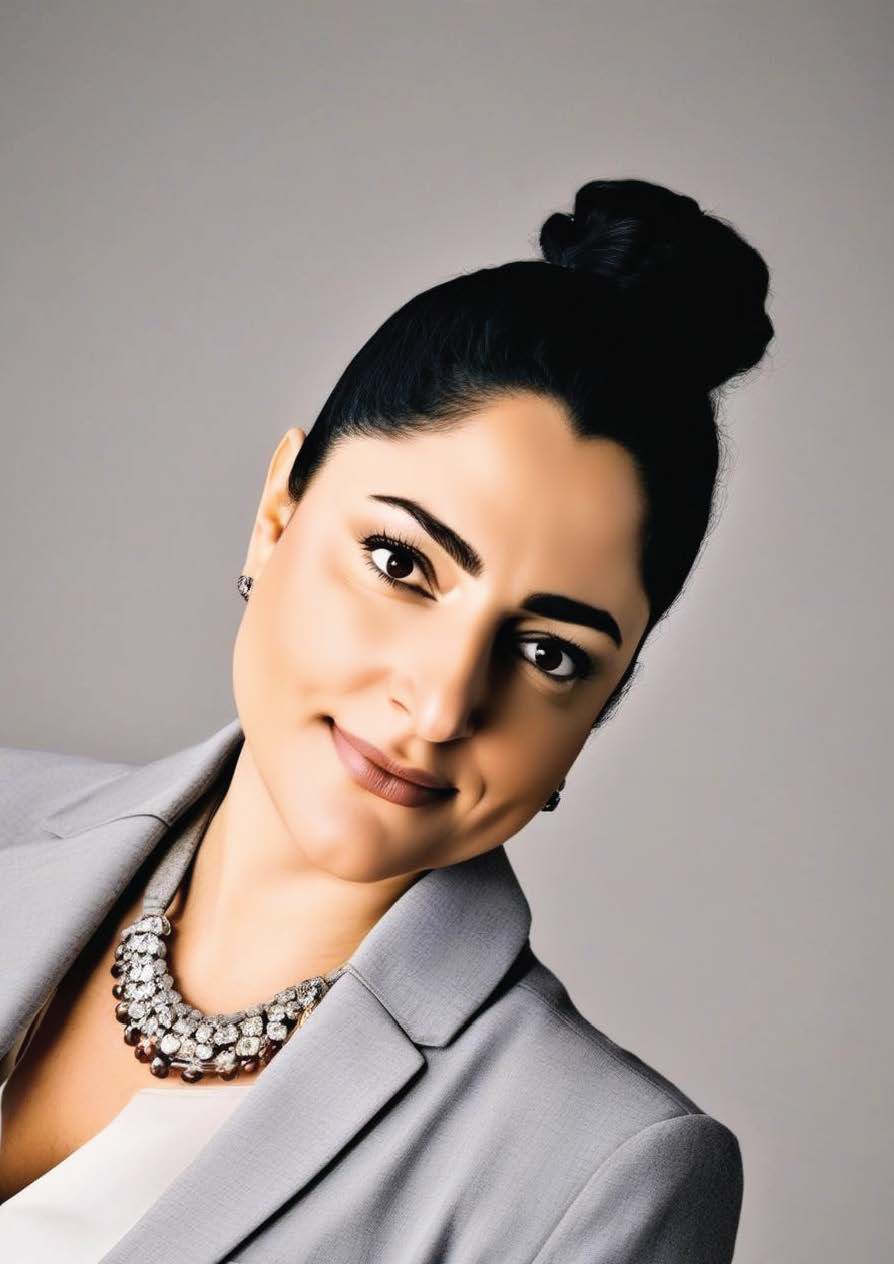
Prof. Dr. Zayde Ayvaz
Professor of Fisheries Industry Engineering at ÇOMÜ with 15+ years of experience in seafood quality assessment. Her research spans computer vision, spectroscopy, and food safety in aquatic products.