In September 2024, our team received a gold medal at the International Inventions Fair (ISIF) in Istanbul for a patent titled "A Method for Seafood Freshness Determination." It was one of those moments where a decade of research suddenly crystallizes into something tangible -- an award, yes, but more importantly, a validation that the problem we have been working on genuinely matters.
I want to tell you what this invention actually does, why it matters, and the surprisingly long road that led us here.
What Is ISIF?
The International Inventions Fair (ISIF) is one of the most prestigious invention exhibitions in the world. Held annually in Istanbul, it brings together inventors, researchers, and entrepreneurs from dozens of countries to showcase patented innovations across every field -- from medicine and engineering to agriculture and food technology.
Each invention is evaluated by an independent international jury on criteria including novelty, technical feasibility, commercial potential, and social impact. Gold medals are not handed out easily. The jury looks for inventions that solve real problems in ways that are both scientifically rigorous and practically applicable.
Our patent was evaluated against hundreds of inventions from around the globe. Receiving the gold medal meant that the jury recognized not just the science behind our method, but its potential to create meaningful change in the food industry.
The Patent: A Method for Seafood Freshness Determination
So what does it actually do? At its core, our patented method provides a non-destructive way to evaluate seafood freshness by combining digital image analysis with standardized sensory indicators.
How It Works
The method captures digital images of seafood samples and analyzes specific visual parameters -- color distribution, surface texture patterns, and optical characteristics -- using computer algorithms. These digital measurements are then correlated with established sensory freshness indicators (eye clarity, gill color, skin appearance, smell) to produce an objective freshness score. No chemicals. No sample destruction. No expensive laboratory equipment required.
Traditional freshness assessment in the seafood industry relies on one of two approaches: subjective sensory evaluation by trained experts (which is inconsistent and not scalable), or destructive chemical and microbiological tests (which are accurate but slow, expensive, and consume the product being tested).
Our method sits in a fundamentally different space. It is:
- Non-destructive: The fish remains intact and sellable after testing
- Objective: Digital analysis removes human subjectivity
- Fast: Results in seconds rather than hours or days
- Scalable: Can be deployed at any point in the supply chain
- Affordable: Requires only a camera and processing software
The Journey: From Auckland to a Gold Medal
This patent did not emerge from a single eureka moment. Its roots go back to 2011, when I was a post-doctoral researcher at the University of Auckland in New Zealand.
There, I worked on what we called the "Two Image Method" -- a technique for quantifying color changes in food products using digital photography under controlled conditions. Published in 2012, this research established the fundamental principle that carefully captured digital images could reveal quality information invisible to the naked eye.
After Auckland, I returned to Turkey and continued developing these ideas. Over the next decade, our research expanded in several directions:
- Refining the imaging protocols for different seafood species
- Building correlation models between visual parameters and chemical freshness indicators
- Developing standardized scoring systems that could work across different environments
- Integrating machine learning to improve prediction accuracy
- Testing the method in real-world supply chain conditions, not just laboratory settings
Each step built on the previous one. Each publication refined the approach. By the time we filed the patent, we had over a decade of data supporting the validity of the method.
Why Non-Destructive Matters
If you are outside the food industry, "non-destructive testing" might sound like a minor technical detail. It is not. It is transformative.
Consider the current reality: to chemically test a batch of fish for freshness, you must take samples from that batch. Those samples are destroyed in the testing process. If you are a retailer receiving a shipment of high-value sea bass, you might test 2-3 fish out of hundreds -- and those tested fish can never be sold. For expensive species, this represents a significant cost.
More importantly, testing only a small sample introduces statistical uncertainty. What about the fish you did not test? A non-destructive method can potentially evaluate every single fish without any loss. This changes the economics of quality assurance entirely.
The Gold Medal: What It Means
ISIF evaluates inventions on four main criteria:
- Novelty and inventiveness: Is this genuinely new? Does it represent a creative leap?
- Technical quality: Is the science sound? Is the method reproducible?
- Commercial viability: Can this be manufactured and sold at scale?
- Social benefit: Does this solve a real problem that affects people's lives?
Our gold medal indicates that the jury found our invention strong across all four dimensions. The novelty lies in the specific combination of digital analysis and sensory correlation. The technical quality is backed by years of peer-reviewed research. The commercial viability is already being demonstrated through our partnership with Migros. And the social benefit -- helping ensure that seafood reaching consumers is genuinely fresh -- speaks for itself.
What Comes Next: DENGiZ and the Mobile App
An award is gratifying, but the real goal has always been impact. That is why the next chapter of this story is the one I am most excited about.
Through the DENGiZ project (Green Wave: Safe and Traceable Fish from Sea to Table), funded by TUBITAK SAYEM and developed in partnership with Migros -- Turkey's leading food retailer -- we are taking our patented method from the laboratory to consumers' smartphones.
The vision is straightforward: a mobile application where anyone -- a retailer, an inspector, or even an everyday consumer -- can point their phone camera at a fish and receive an instant freshness assessment. Behind the scenes, the app will use our patented algorithms, enhanced by cloud-based AI processing, to deliver a reliable freshness score.
We are currently in the development phase, building the mobile infrastructure and training the AI models on a comprehensive dataset of seafood images across species and freshness levels. The Migros partnership gives us access to real supply chain data that no university lab could replicate on its own.
A Personal Reflection
Twelve years is a long time to work on a single idea. There were years when the research felt incremental, when reviewers questioned whether image analysis could ever be accurate enough, when funding was uncertain. The path from basic research to a patented, award-winning, commercially viable method was neither straight nor guaranteed.
But looking back, every step was necessary. The Auckland post-doc gave us the foundational imaging technique. The years of publication built the scientific credibility. The patent process forced us to define exactly what was novel and protectable. And the ISIF evaluation confirmed that the international community sees the same potential we do.
If there is a lesson here, it is this: applied research takes patience. The gap between "this works in the lab" and "this changes an industry" is measured in years, not months. But if the problem is real and the science is sound, the journey is worth it.
I would love to hear from others working on non-destructive food quality assessment. If you are in this space -- whether in research, industry, or technology -- please reach out through the contact page or connect with me on LinkedIn.
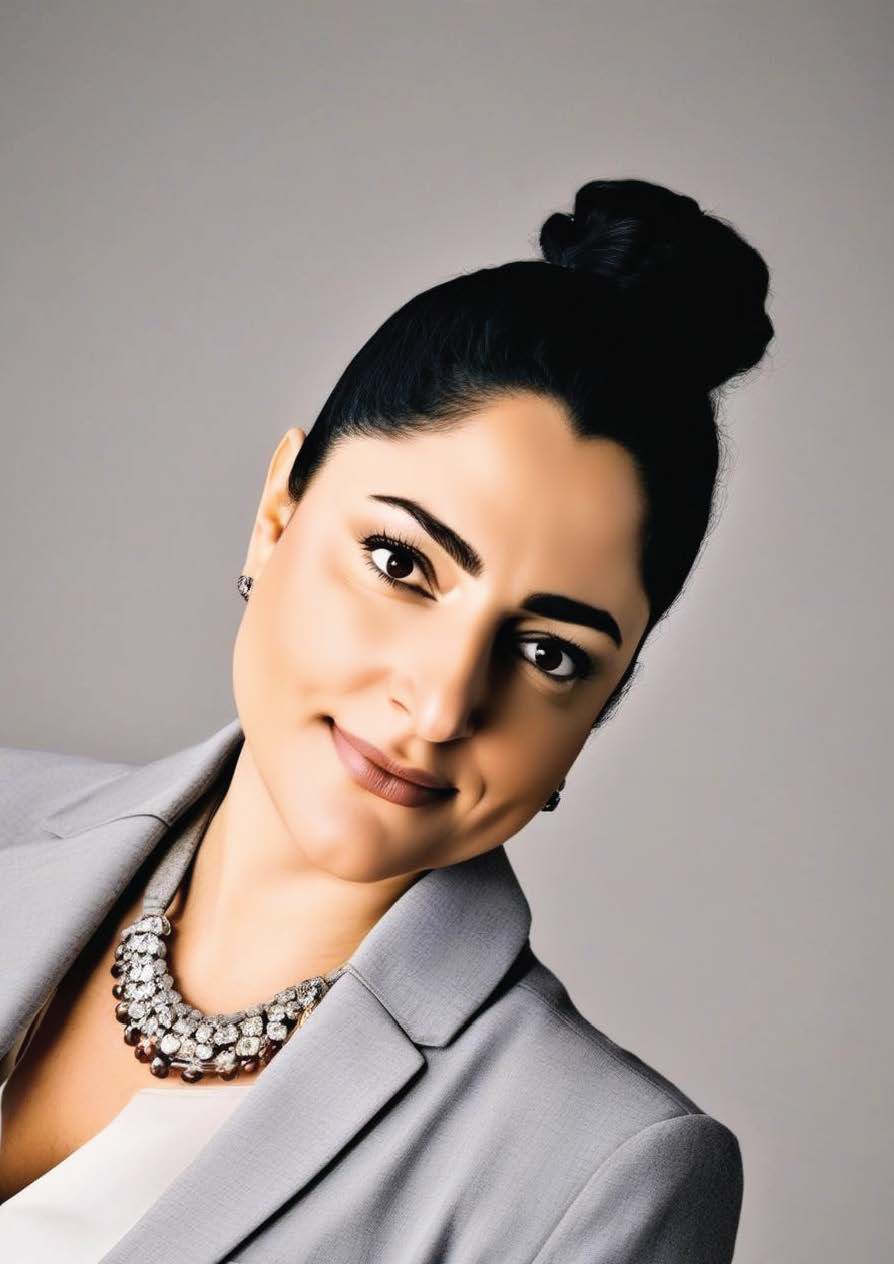
Prof. Dr. Zayde Ayvaz
Professor of Fisheries Industry Engineering at COMU. Researching AI-driven seafood quality assessment and sustainable blue food systems.